

Akutah: “Tariff Adjustments Driven by Strong Legal Framework”
Nifemi Coker
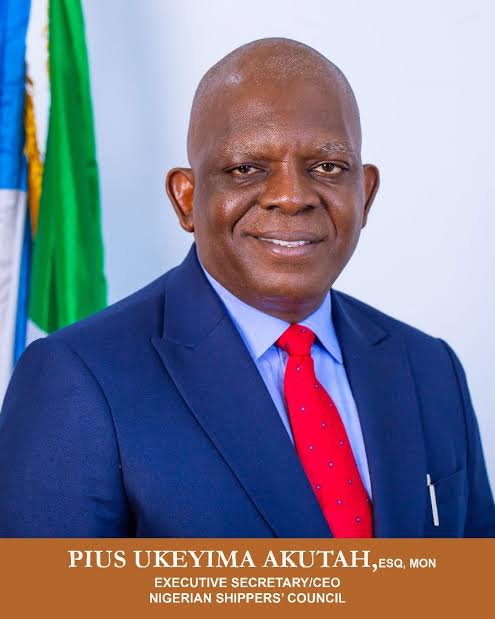
The Executive Secretary and Chief Executive Officer of the Nigerian Shippers’ Council, Barrister Akutah Pius Ukeyima, has defended the agency’s recent regulatory actions, asserting that tariff adjustments and the management of the International Cargo Tracking Note are governed strictly by law and due process rather than external influence.
In a comprehensive explanation of the Council’s strategy, Akutah addressed criticisms of policy inconsistency by maintaining that the primary goal is to sustain a delicate equilibrium between protecting shippers and ensuring the long-term viability of service providers.
He emphasized that the Council’s decisions are rooted in the Port Economic Regulations 2025, which mandate the oversight of the maritime industry to ensure it remains a driver of national growth.
Defending the approval of recent tariff hikes, Akutah revealed that the Council had resisted intense pressure from service providers for over two years despite mounting operational costs and high inflation. While some industry players demanded increases ranging from 150 percent to 300 percent, the Council moderated these requests by approving a structured framework of approximately 35 percent.
This was implemented as a flexible band rather than a fixed rate, allowing operators to adjust between 10 percent and 20 percent based on their specific operational realities.
Akutah warned that because 80 percent of Nigeria’s trade relies on the maritime sector, arbitrary or excessive hikes would trigger immediate negative ripple effects across the entire national economy.
Regarding recent industry friction, Akutah clarified that disputes were not a sign of systemic regulatory failure but were largely isolated incidents, such as the breakdown in dialogue between Mediterranean Shipping Company and its stakeholders.
While other shipping firms concluded their engagements smoothly, the situation at MSC required his personal intervention to de-escalate tensions and restore order.
He used the occasion to warn against regulatory capture, arguing that the Council must remain an impartial arbiter to prevent external interests from undermining the transparency required to protect the entire value chain.
Addressing the delayed rollout of the International Cargo Tracking Note, Akutah attributed the pause to a complex web of inherited legal disputes and court cases.
He explained that the Council is currently collaborating with the Ministry of Justice to clear these outstanding litigations to ensure that the eventual implementation is legally sound and immune to further suspensions.
He reaffirmed that once active, the tracking note will be critical for improving cargo security and safeguarding national revenue, ultimately positioning Nigeria as a more credible and secure partner in the global trade market.
About The Author