

‘AfCFTA Won’t Succeed Without Clear, Measurable Policies,’ says Segun Musa
Nifemi Coker
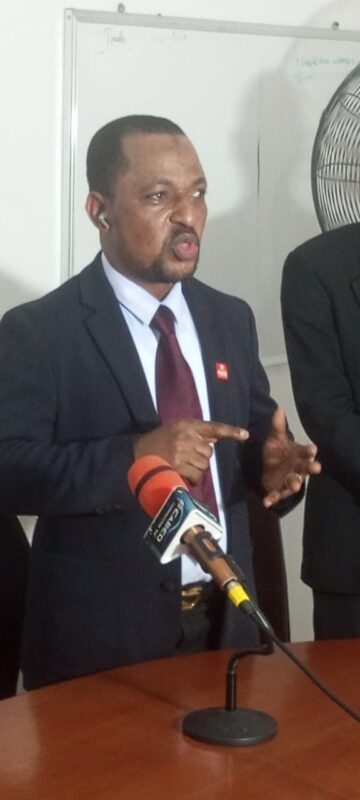
A maritime industry expert, Dr. Segun Musa, on Tuesday declared that the African Continental Free Trade Area (AfCFTA) would not deliver meaningful impact for Nigeria without clearly defined, holistic and measurable policies to drive its implementation.
Musa made the assertion while speaking at a roundtable discussion organised by the Maritime Reporters Association of Nigeria (MARAN), where he openly criticised what he described as Nigeria’s ceremonial participation in the continental trade scheme.
According to him, genuine participation under AfCFTA should reflect in export volumes and measurable benchmarks rather than media showcases of minimal shipments.
“If we were serious under this scheme, we should be talking about exporting 200,000 to 300,000 containers by now — even up to a million. Instead, we are celebrating one or two containers and gathering media houses to showcase them. Is that participation? It’s painful for a country of this size,” he said.
Musa argued that policy frameworks must be predictive and structured in a way that allows stakeholders to key into them with certainty of outcomes.
“A policy must be holistic. You should be able to key into it and predict what will happen. That is the essence of policy. What we are doing now is a waste of time and resources,” he stated.
Responding to question on policy gaps and measurable benchmarks required to reposition Nigeria under AfCFTA. Musa maintained that the challenge was not the absence of declarations but the lack of institutional readiness and structured participation.
He also took a swipe at the proposed National Single Window, which government officials have projected as a major reform in trade facilitation, questioning its capacity to deliver change without first addressing systemic inefficiencies within government agencies.
“Single window? What change will it bring? Nothing will change if the agencies inside that system are not competent and ready. You cannot pull the cart before the horse,” he said.
The maritime expert warned that digitisation alone cannot resolve deep-rooted operational weaknesses, stressing that without performance standards and accountability mechanisms, the Single Window could amount to “just another jamboree.”
“You must ensure the agents are ready before you start talking about digitisation. Otherwise, it will remain a single window in name, while inefficiency continues behind it,” he added.
Drawing from his 36 years of experience in the industry, Musa insisted that his position was based on technical knowledge and integrity rather than pessimism.
“If you are serious, I will tell you you are serious. If you are not serious, I will tell you you are not serious. I don’t compromise my integrity,” he declared, adding that Nigeria must move beyond rhetoric to practical, measurable action.
He further compared Nigeria’s export performance with that of Europe and Asia, noting that serious trading economies focus on volume and competitiveness rather than symbolic shipments.
He expressed concern that without concrete benchmarks, coordinated institutional reforms and export-driven strategies, Nigeria may struggle to maximise opportunities under AfCFTA.
The roundtable ended with renewed calls for actionable policies, institutional competence and measurable targets to ensure that the continental trade agreement translates into tangible economic gains for the country rather than remaining, in Musa’s words, “a wasteful exercise.”
About The Author